
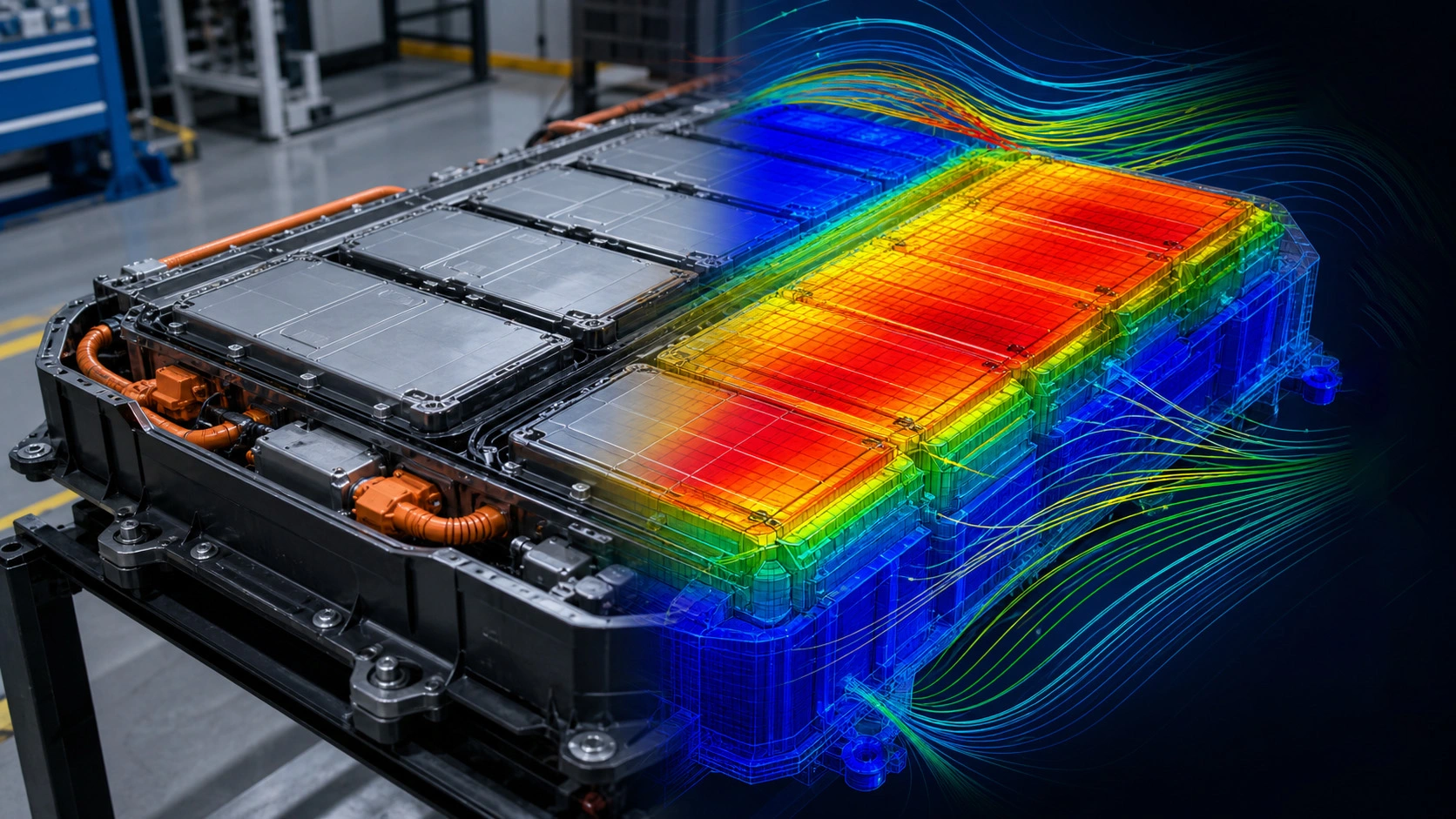
There is a version of India's electric future where we get the battery right the first time. Where our engineering teams build products that do not fail in the field, do not generate recalls, and do not quietly lose credibility to imports because our thermal management assumptions could not survive a real Indian summer at full discharge.
That version is achievable. But it requires a different philosophy about when and how battery systems get validated — and a different ambition about what Indian engineering teams are capable of producing.
The Scale of What We Are Building
India's EV market is projected to reach ₹20 lakh crore in economic value by 2030. The government's PLI scheme for Advanced Chemistry Cells targets 50 GWh of domestic battery cell manufacturing capacity. The national EV penetration target stands at 30% of total vehicle sales within this decade.
This is no longer a niche technology play. This is an infrastructure-scale industrial transformation happening in real time. And at the center of every electric vehicle, every grid-tied energy storage system, every UAV and eVTOL platform being engineered in India today is a Battery Management System — the control intelligence that determines whether a battery delivers on its promise for its entire service life, or doesn't.
The System Everyone Is Underestimating
Battery chemistry gets the headlines. Cell energy density, cathode material evolution, solid-state roadmaps — these are the conversations at product launches and industry panels. The Battery Management System rarely appears there.
That is a strategic blind spot with measurable consequences.
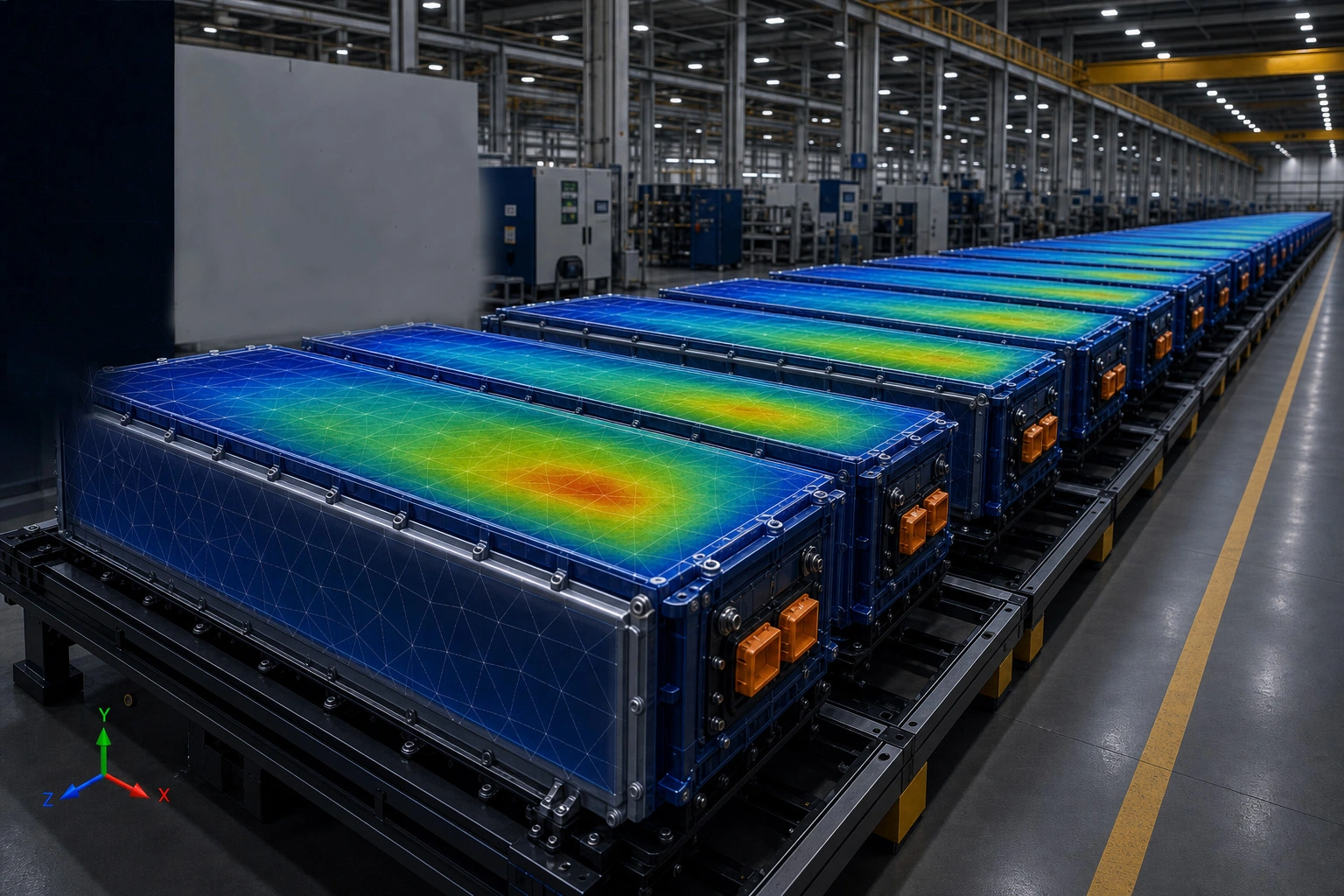
Battery management failures account for an estimated 40% of EV safety incidents globally. The difference between a battery pack that retains 82% of its original capacity at 1,00,000 km and one that degrades to 64% at the same mileage is, more often than the industry publicly acknowledges, not the cell chemistry. It is the thermal management design embedded in the BMS architecture — whether that design was validated against real operating conditions before the product reached the customer, or discovered in the field afterward.
The optimal operating temperature window for most Li-ion chemistries is 15–35°C. India's peak summer ambient temperatures exceed 45°C across large parts of the country. The gap between those numbers is where Battery Management Systems either perform as designed or expose the products they govern to risk. It is where product reputations are built or eroded.
The Methodology Separating Leaders From the Field
The EV and battery companies globally that are consistently hitting product targets and launching without recurring field incident patterns share a design methodology that most of the industry still treats as a differentiator rather than a baseline: they validate their battery management architecture in simulation before they build physical prototypes.
Not instead of building them. Before building them.
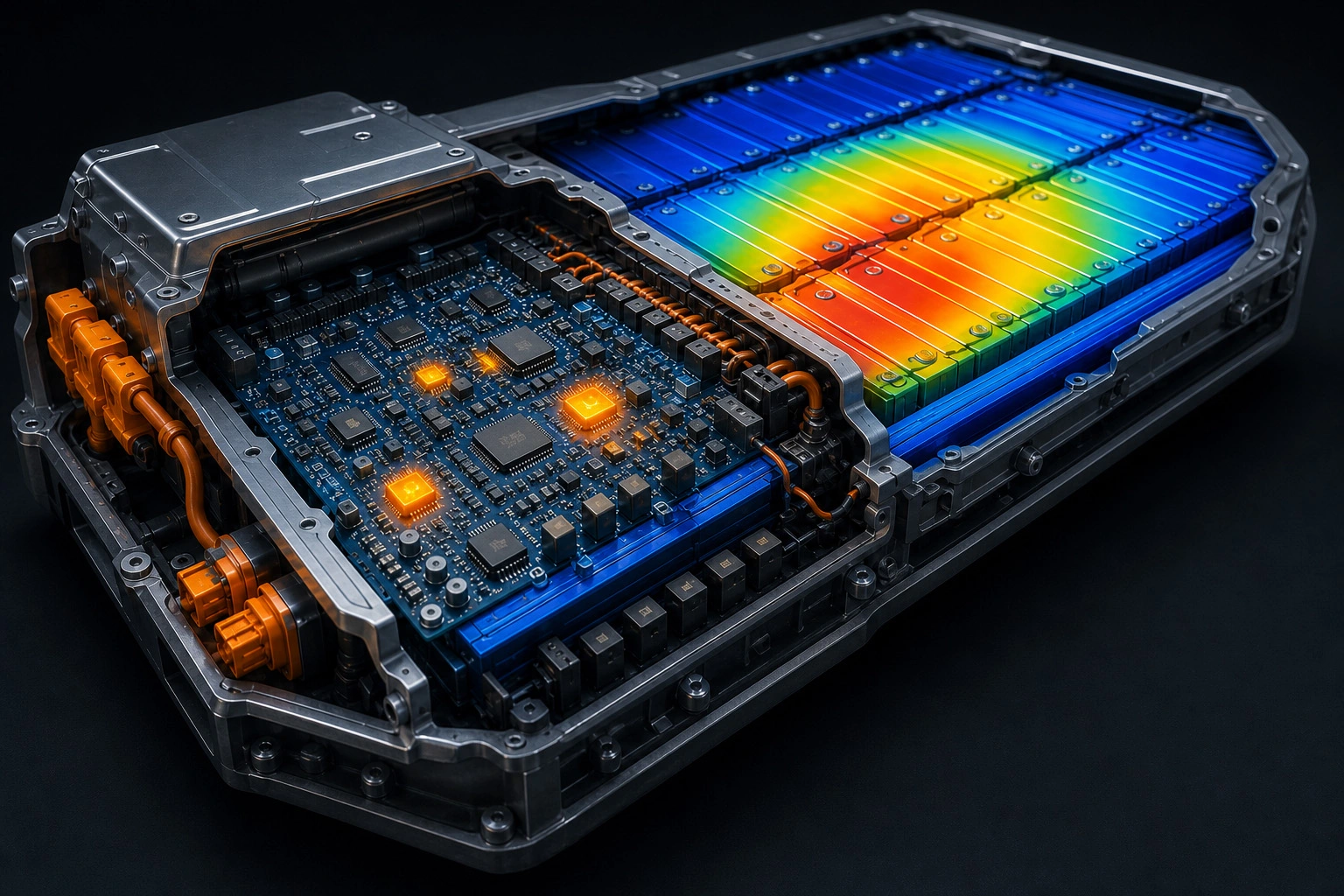
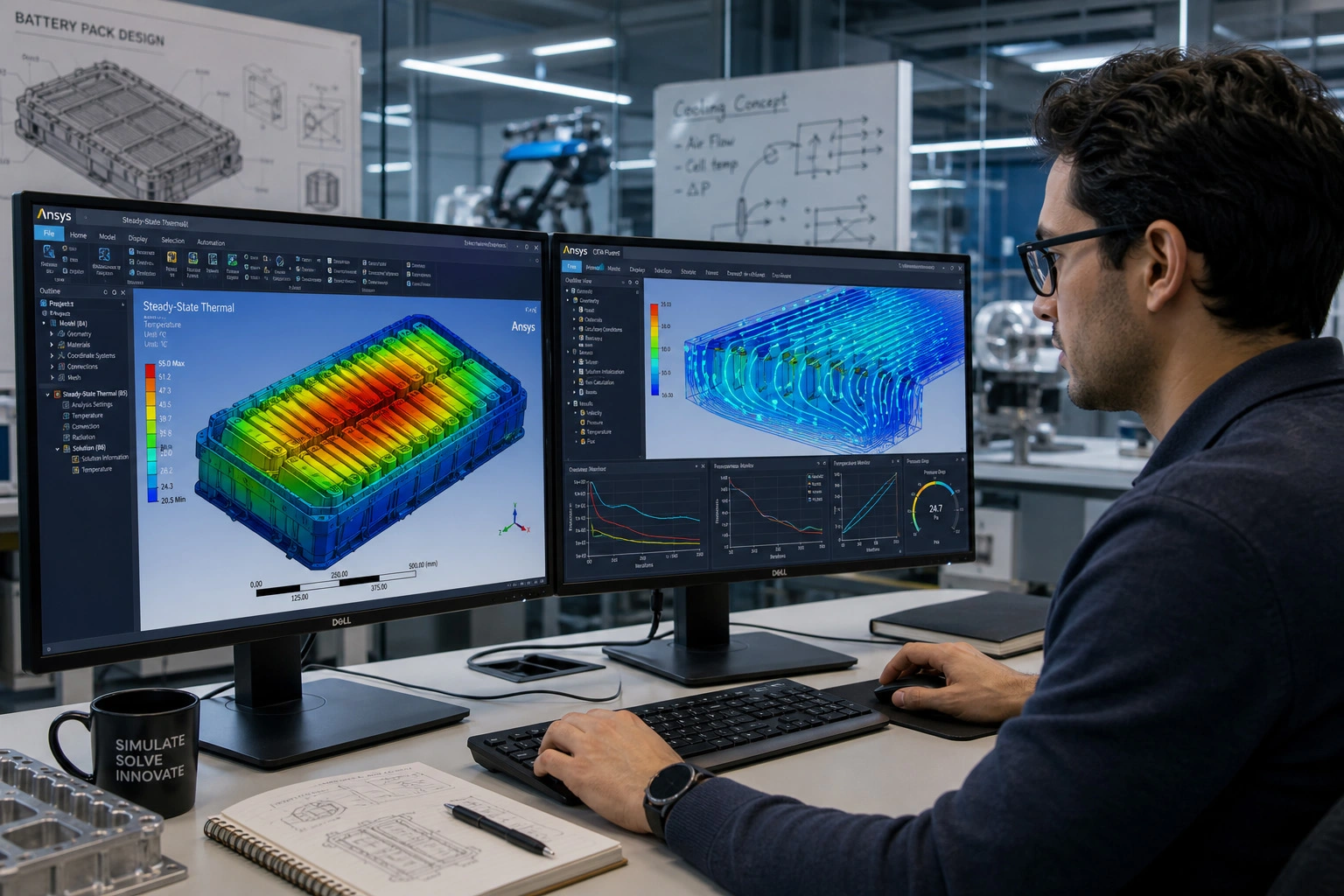
Multi-physics simulation — combining computational fluid dynamics for cooling architecture analysis with electrochemical battery modeling for cell-level thermal behavior — allows an engineering team to see exactly how heat develops across a 200-cell module during a fast-charge cycle before a single cell is placed in a test fixture. It allows them to quantify temperature differentials across the pack at various discharge rates. It allows them to answer the question "will this design survive 45°C ambient Indian conditions at full load?" before ₹50–80 lakhs is committed to building the physical version that will tell them the same thing, three months later.
The data on this methodology is consistent. Engineering teams that front-load simulation report 40–50% fewer physical prototype iterations and reach production timelines 6–8 months faster than equivalent programs built on test-first workflows. The global BMS market is growing at 21% CAGR toward $33 billion by 2030. The companies capturing that value are designing in simulation first.
The Question for Every Engineering Leader in This Space
India has the engineering talent. The demand is arriving at scale. The policy architecture — PLI schemes, FAME subsidies, EV adoption mandates — is creating urgency that is now real rather than aspirational. The variable that determines which Indian engineering teams lead this transformation and which spend the next decade reactive rather than proactive is design methodology.
Simulation-first battery management engineering is not a capability reserved for OEMs with billion-dollar R&D budgets. It is increasingly the operational standard for engineering teams that expect to complete DVT without surprises and launch products that perform as designed in the conditions they were designed for.
India's EV battery future is being engineered right now — in Pune, Bangalore, Chennai, Hyderabad, and NCR. On simulation workstations, in CAE environments, in R&D labs making design decisions today that will determine product outcomes in 2027 and beyond.
For every CTO, engineering head, and founder in this space, the question is the same: is your BMS design being validated in software before you build it, or are you waiting for physical testing to show you what simulation could have confirmed six months earlier?
Is Your BMS Architecture Being Validated in Simulation?
Kaizenat's CAE engineers work with EV and battery teams across India on simulation-first BMS validation — thermal management, cooling architecture, and electrochemical modeling. Book a consultation to discuss your program.